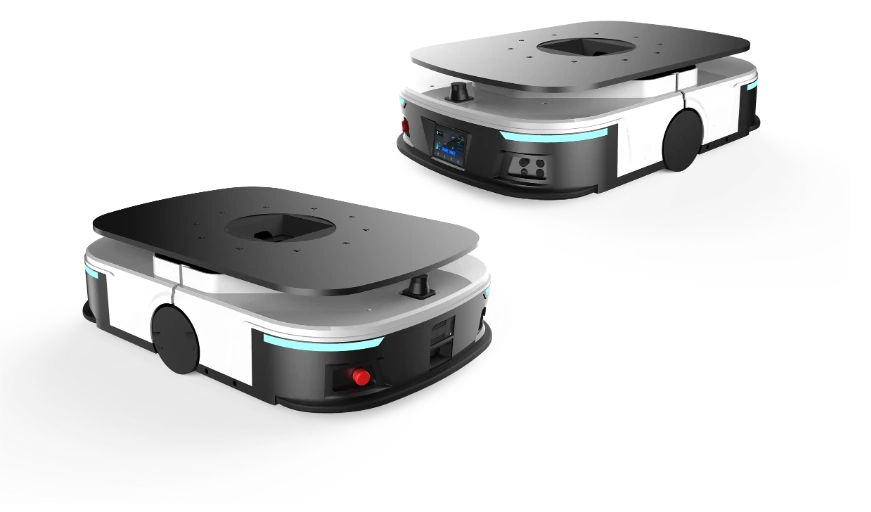
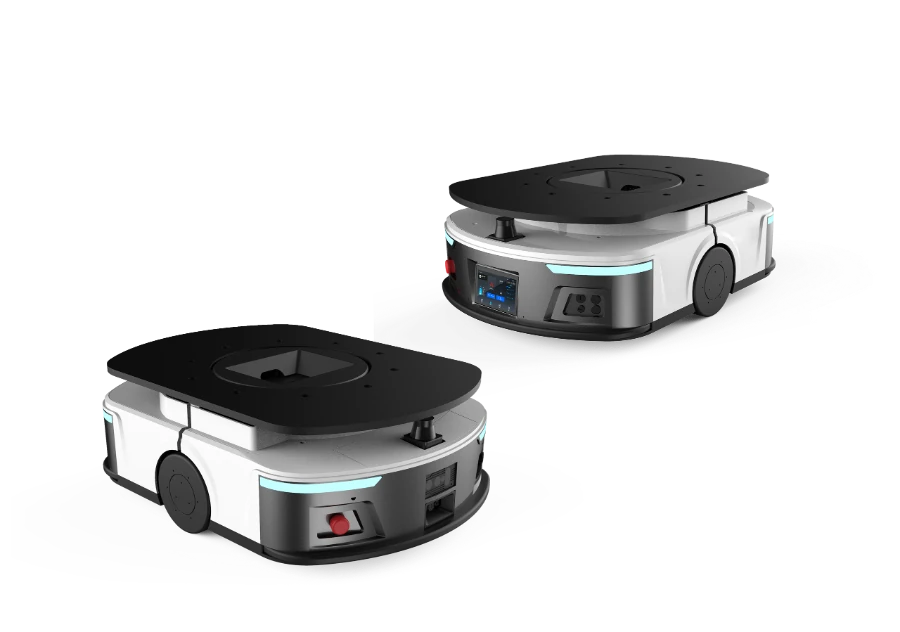
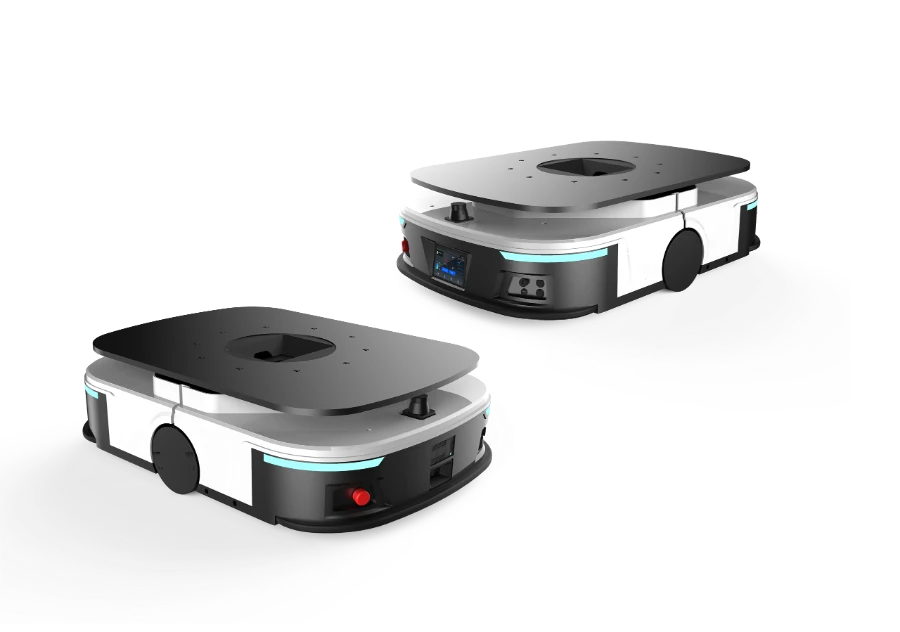
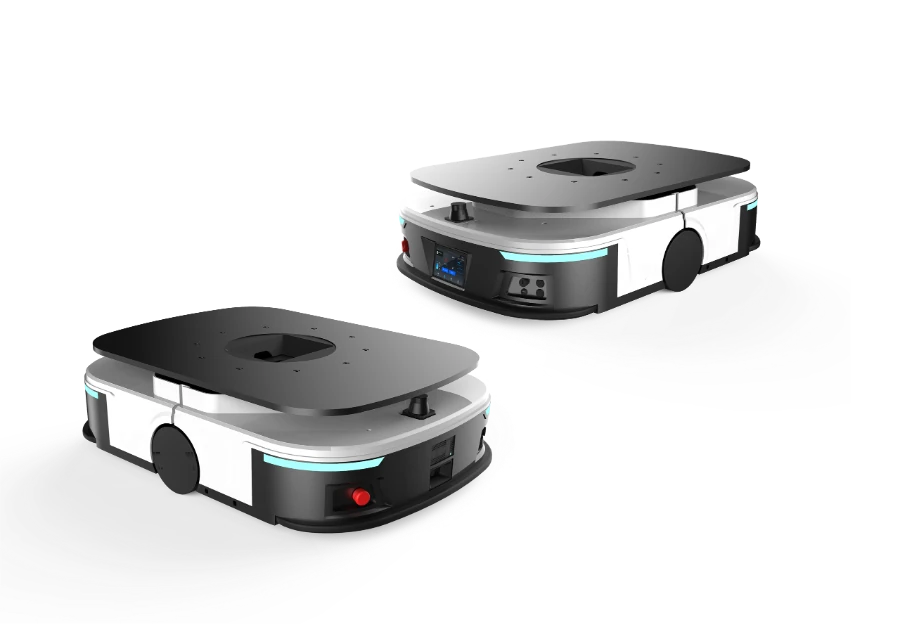
Underride lifting robot
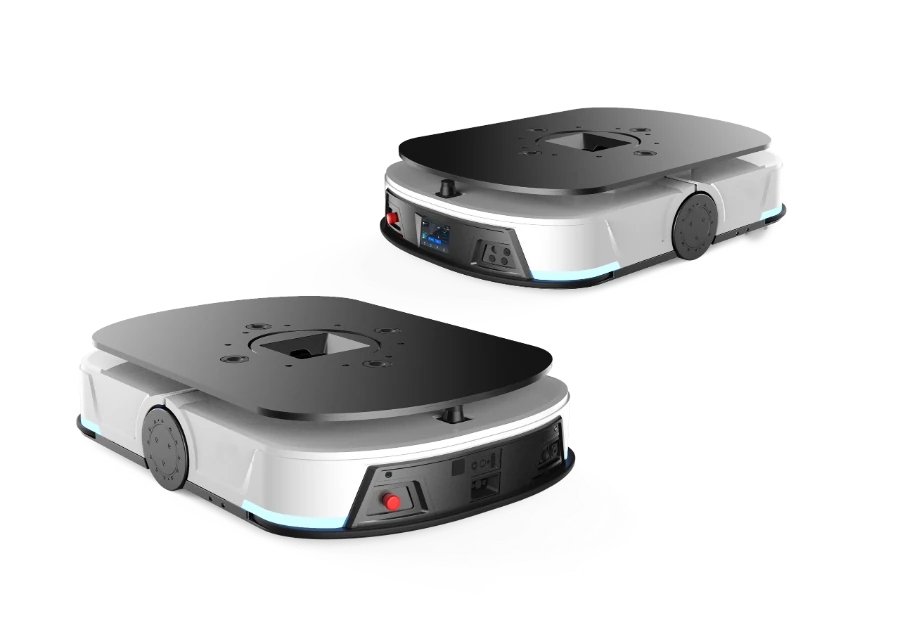
Differential underride lifting, 400 kg, for small and medium rack transfers in 3C and automotive parts workshops.
The latent jacking robot (also called an underride lifting robot) drives under a rack, lifts the whole rack and carries it to where it is needed, with no forklift and no pushing by hand. The JS-U series has 20 models on sale from 50 to 4,000 kg: underride lifting, underride fork, cage trolley, expandable chassis, roller transfer, tote and SMT loading models.
Manufacturer: Wuxi Jiangsong Robot Co., Ltd., 178 Changjiang East Road, Xinwu District, Wuxi, Jiangsu, China. Sales: +86 18168891000. Email: gggtakqqq@foxmail.com. Request a quote.
JS-U SERIES · Underride AGV
It drives under a rack, lifts the whole rack and carries it to where it is needed, with no forklift and no pushing by hand. Eleven underride lifting models from 50 to 4,000 kg, plus fork, cage trolley, expandable chassis, roller transfer, tote and SMT loading models.
POSITIONING
On racks that are moved whole: underride lifting, chosen by weight between 50 and 4,000 kg. On racks with crossbars underneath that a lifting robot cannot drive under: the JS-U1200-DLF underride fork. In totes that go into rack positions: the JS-U0300-DLW tote robot. For sideways transfer with conveyors: the JS-U0400-DNR roller transfer robot.
WHERE IT RUNS
{{ u.desc }}
KEY MODELS
Differential underride lifting, 400 kg, for small and medium rack transfers in 3C and automotive parts workshops.
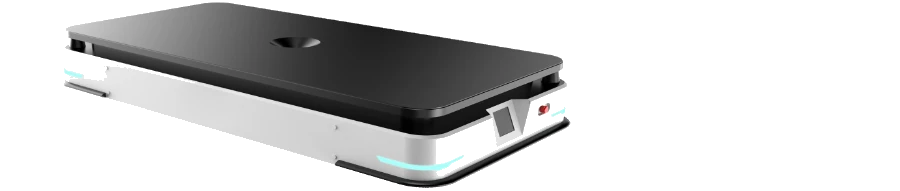
Differential underride lifting, 600 kg, for workshop rack transfers and goods-to-person picking.
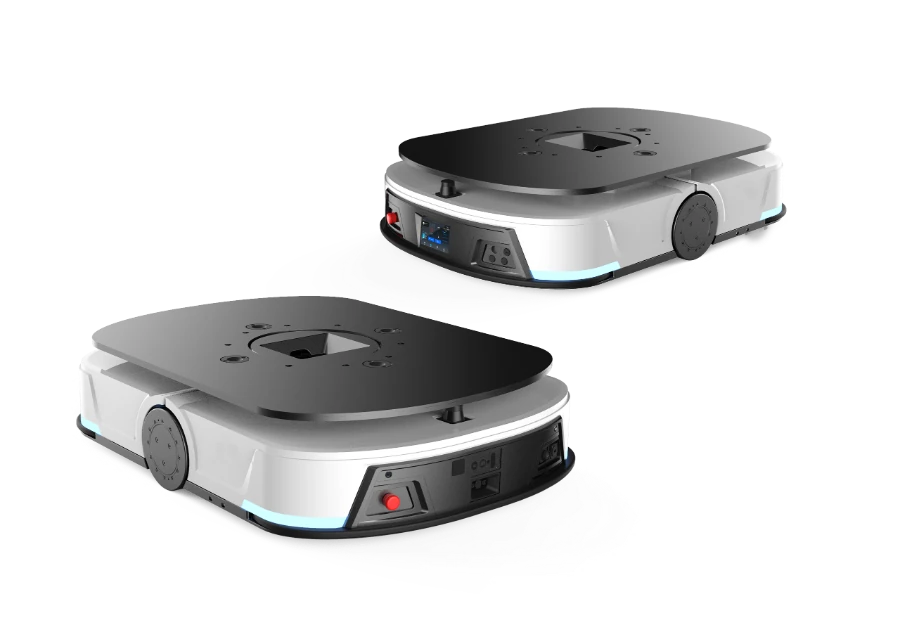
Differential underride lifting, the most widely used model for one-tonne projects. Lift height 60 ± 2 mm; 1,150 × 800 × 250 mm.
Differential underride lifting, 1,500 kg, standard lifting.
Differential heavy-duty underride lifting, 2 tonnes, for heavy loads such as fixtures in lithium battery plants and full pallets in metalworking; for narrow aisles choose the omnidirectional JS-U2500-SLP.
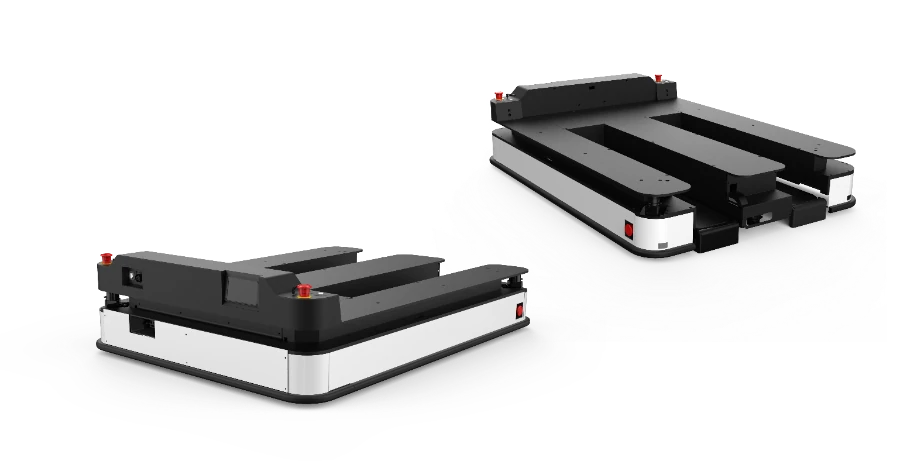
Fork arms slide into the space under the carrier and lift it, for racks with crossbars that a lifting robot cannot drive under. Only 245 mm tall, lifting 400 mm for stacking.
FULL RANGE
HOW IT WORKS
{{ p.desc }}
NAVIGATION
{{ t.desc }}
MODEL SELECTION
{{ s.desc }}
SAFETY
{{ s.desc }}
Aisles must be kept clear and people must follow the training rules; we explain both in detail during training at delivery.
SITE & RACK REQUIREMENTS
Tell us in advance about black or stainless steel carriers: black reflects little light and stainless steel acts as a mirror, so an extra algorithm tuning step is needed, with its time and cost listed separately in the proposal. Tall loads that are light at the bottom and heavy at the top tip easily on turns and slopes, so the centre of gravity is checked first.
CHARGING & NETWORK
{{ c.fit }}
High-current and low-current chargers must not be mixed. The number usually follows a rule of thumb: a quarter of the number of robots for one shift, a third for two shifts and a half for continuous three-shift operation, with at least 2. Small models charge fully within an hour and a half and medium and large models within two hours; the 1-tonne lifting series supports fast charging, where 10 minutes gives an hour of running and 60 minutes brings the battery to 70%.
MAINTENANCE & SPARES
{{ m.v }}
ALARMS & RESPONSE
Note the robot number, the fault and when it started; logs from the robot and the dispatch system can be exported, so most problems can be located remotely.
RELATED READING
FAQ
It depends how the materials are held. Racks moved whole call for underride lifting; pallets call for autonomous forklifts. Where there are both, one dispatch system manages underride, fork, tote and transfer robots together.
Look at the underside of the carrier. If it is open and the robot can drive under it, use underride lifting; if there are crossbars that a lifting robot cannot get under, use the JS-U1200-DLF underride fork, whose arms slide into the space underneath and lift it.
No. Laser SLAM handles travel over large areas, and a small number of codes go only at docking points such as under racks, in front of chargers and at machine ports.
Racks need a consistent bottom clearance of 280 to 300 mm, with no crossbars between 130 and 210 mm above the floor. We measure a sample during the site survey, then choose the model or recommend changes to the racks.
No. The WMS decides where goods are stored and the dispatch system decides which robot does the moving; they connect through HTTP/JSON or VDA5050 interfaces.
Yes, with an expandable chassis: it provides mechanical, electrical and communication interfaces, and you build the top module. Customers with embedded development capability can also develop directly on the main controller without writing navigation algorithms from scratch. We can send the interface documentation and 3D models first.
A low-value wearing part takes tens of minutes to replace on site, and a key part 1 to 2 hours if a spare is on hand; without a spare, the robot waits for the part, generally 2 to 5 days in China. For projects with 10 or more robots, we therefore recommend stocking the spares we list.
NEXT STEP
Tell us about your racks, load weights, routes and how many moves you need per hour, and we will send you a proposal.
TO QUOTE THIS, WE NEED
Thank you. Our engineers will review the site conditions you sent and reply within one business day.
Urgent? Call +86 18168891000 directly.
Your mail app has opened with the enquiry filled in. Press Send to deliver it to gggtakqqq@foxmail.com.